This guide provides a step-by-step process for managing the collection of 'Holding Payments/Deposits' through CRM, ensuring accurate tracking and efficient handling of transactions. This process could also be used to collect other outstanding invoices e.g. deposit. By following this guide, users can streamline their payment processes and maintain clear financial records, ultimately enhancing their operational efficiency.
1. Navigate to https://crm.iamproperty.com/Dashboards/Accounts
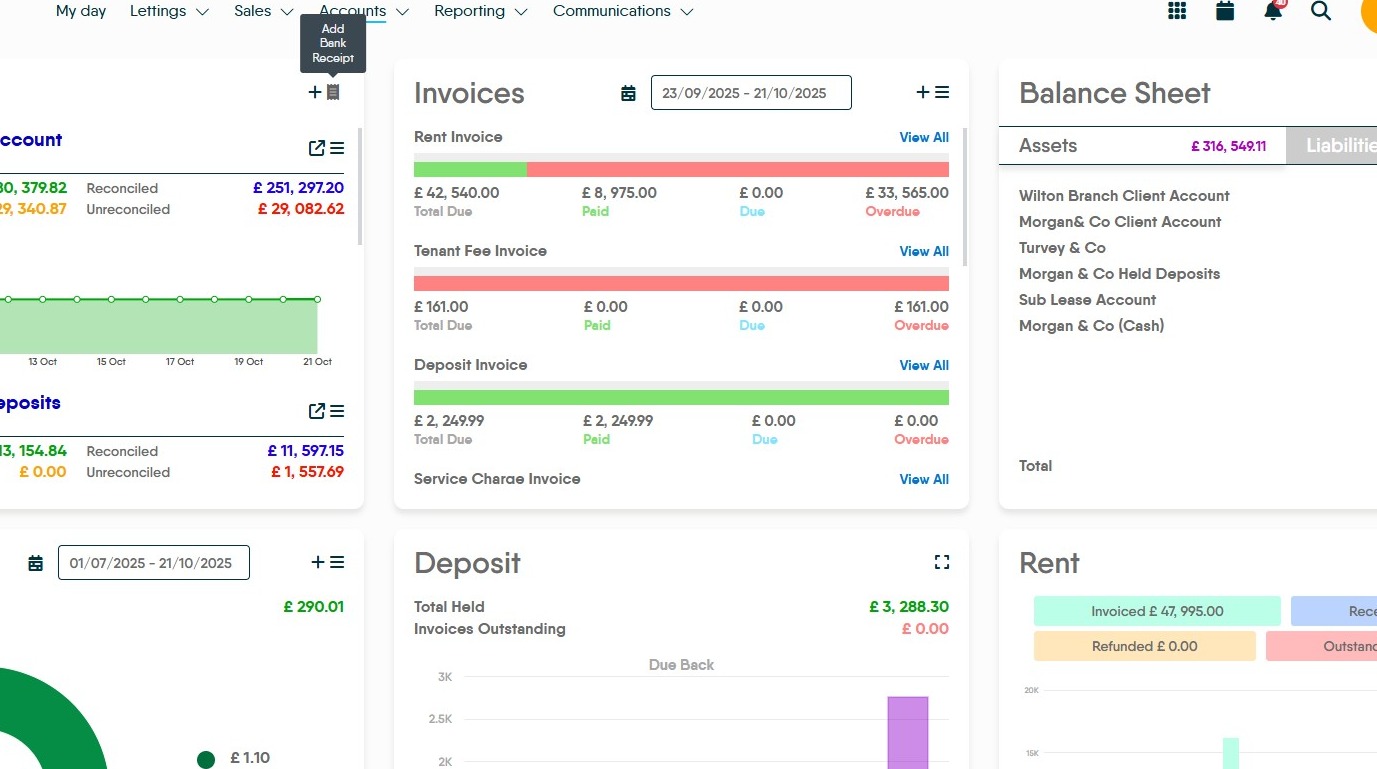
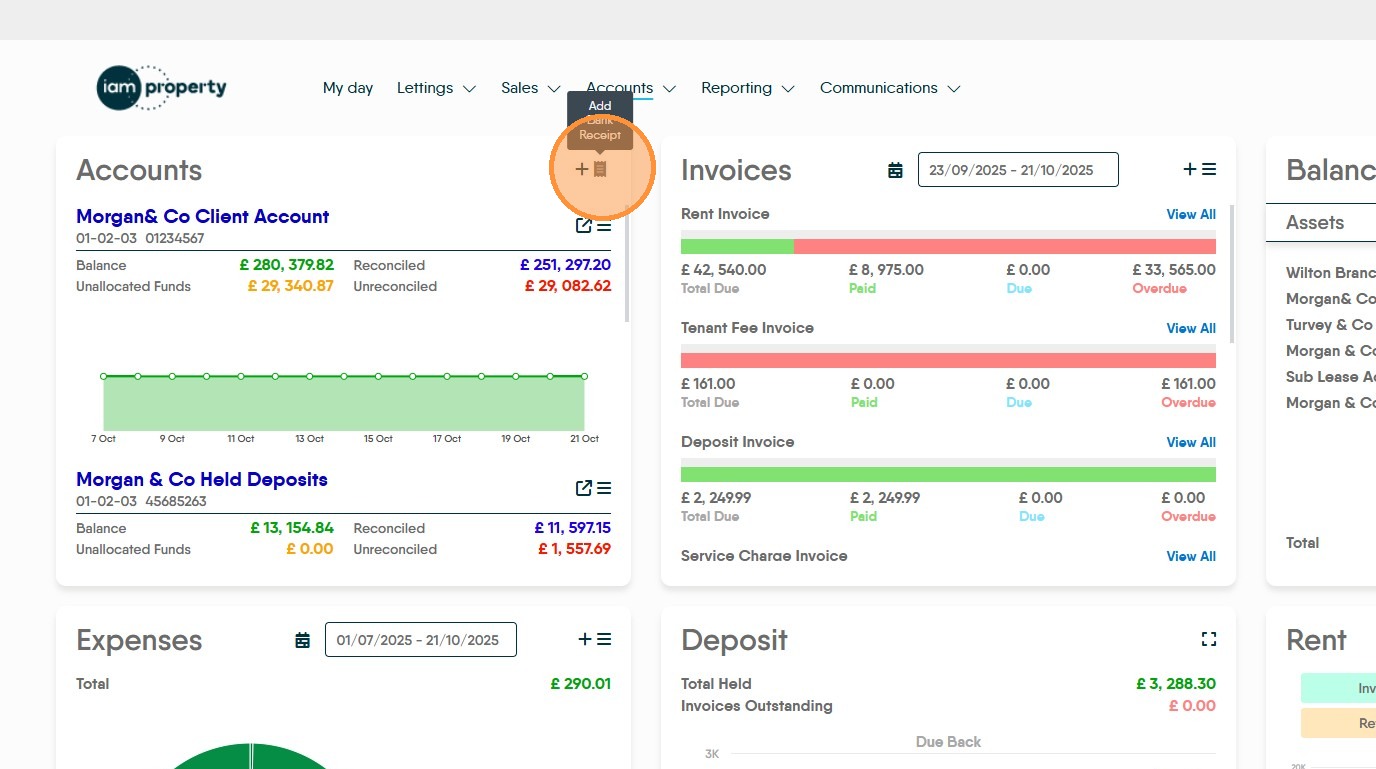
2. Click here. "Add Bank Receipt"
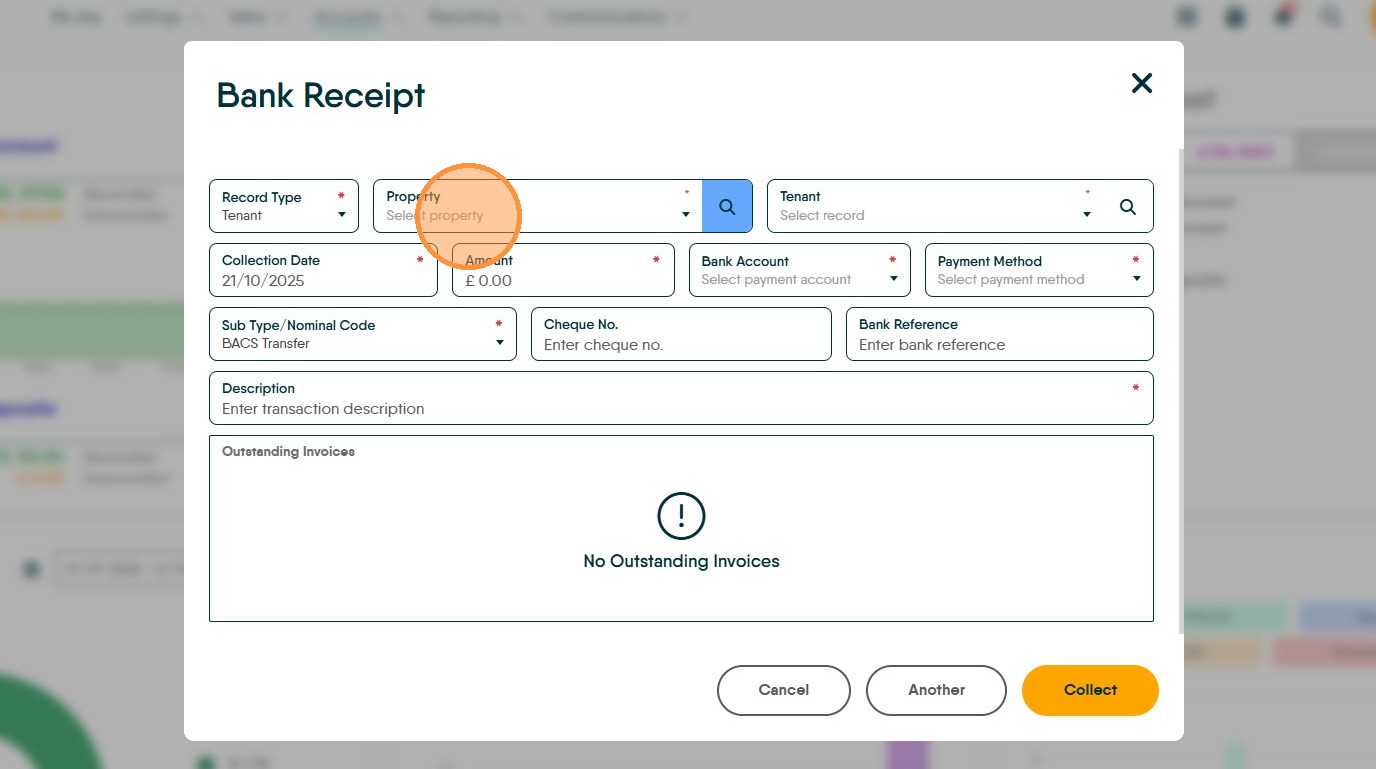
3. Click "Select property"
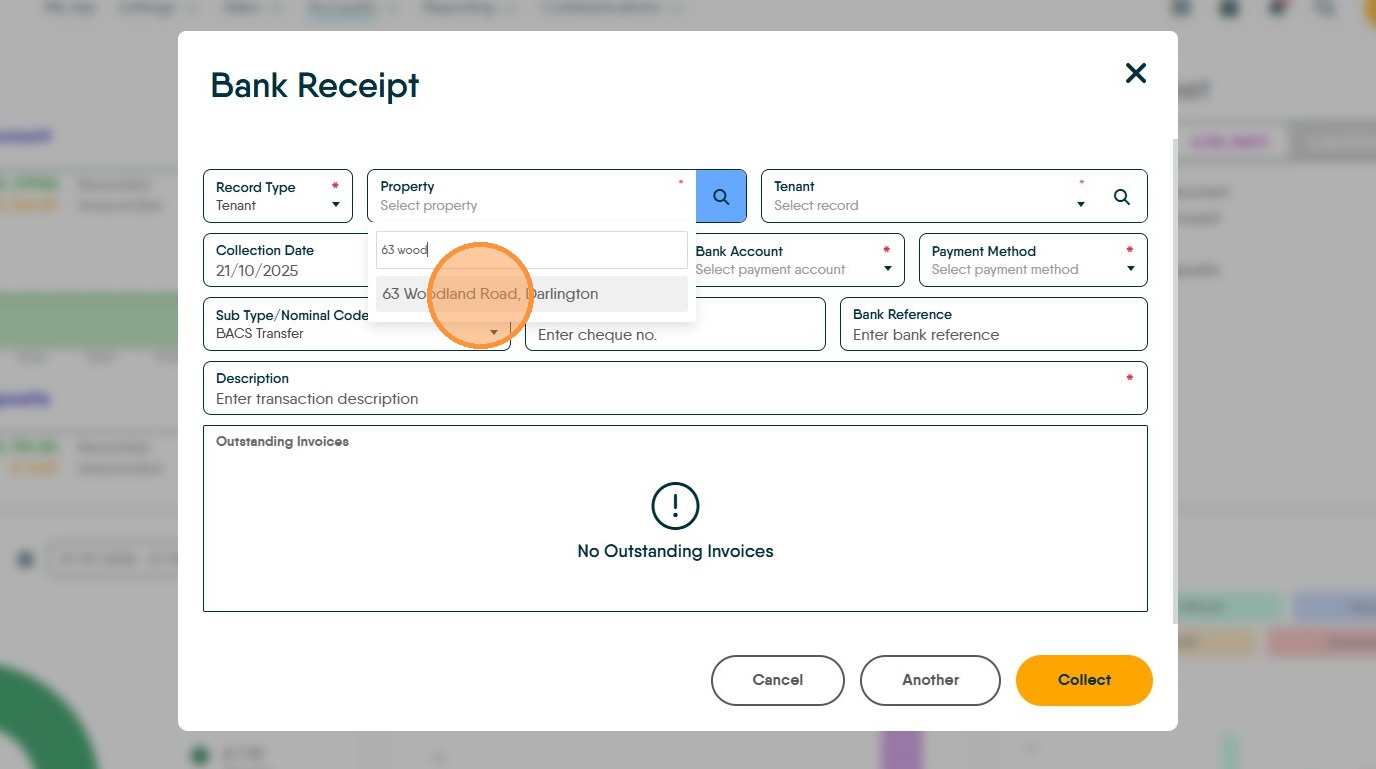
4. Type the details of the property you are searching for and click on it.
5. Click "Select tenant"
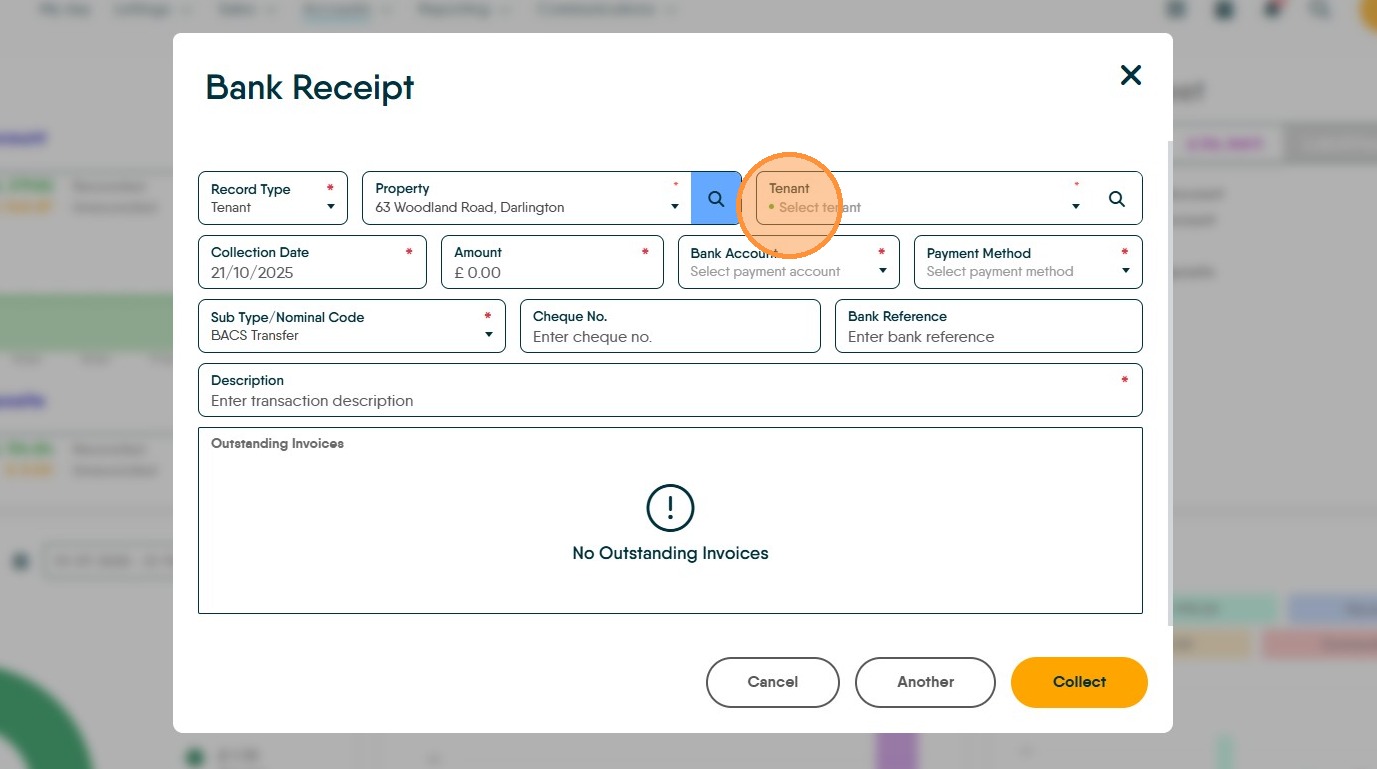
6. From the drop down menu select the tenant you are looking for.
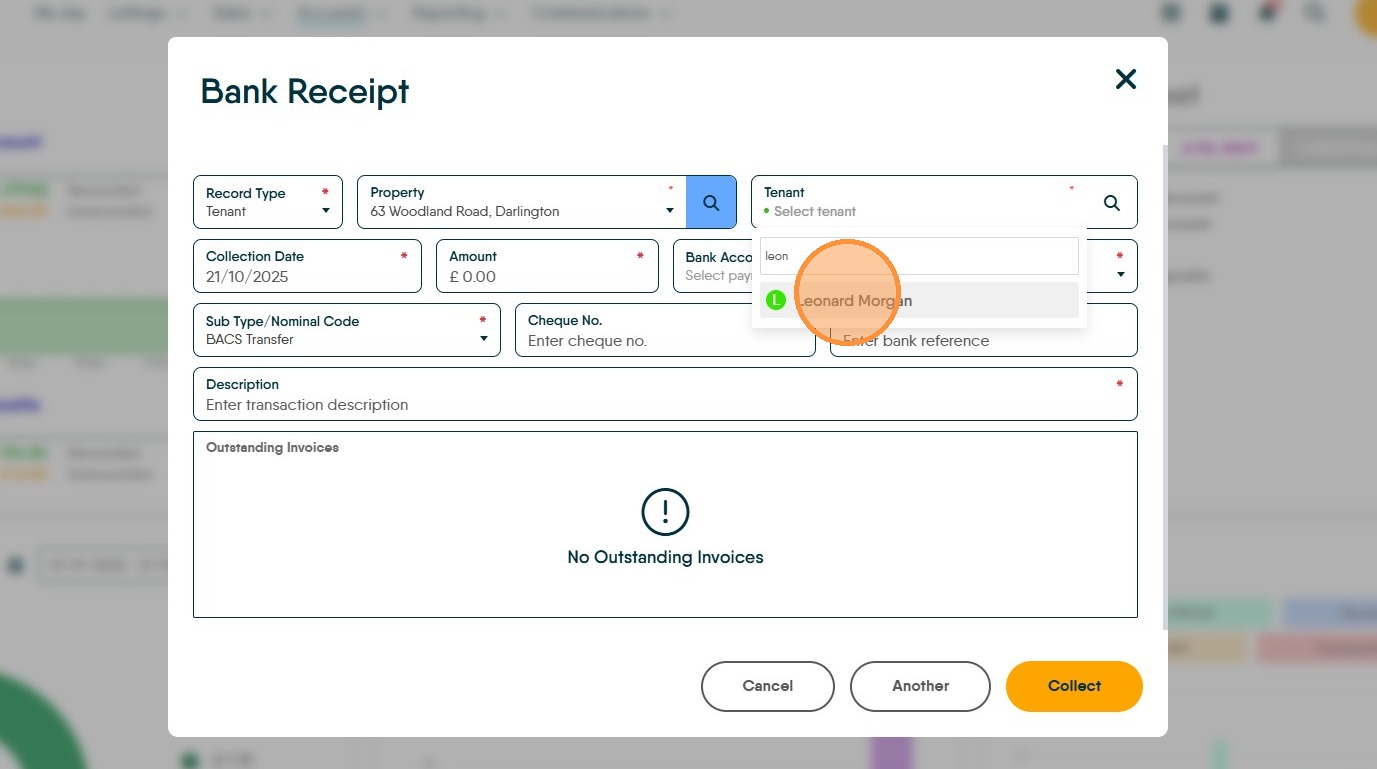
Tip: Tip! You can also search by Tenant rather than Property. To do this click the magnifying glass icon to the right of the Tenant field so it turns blue.
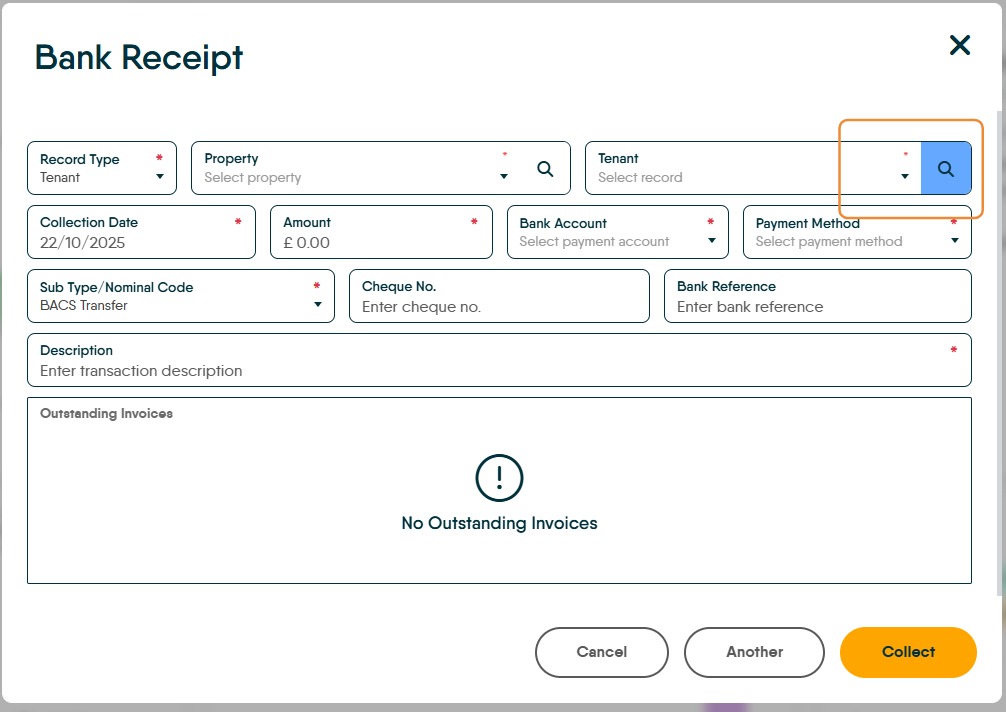
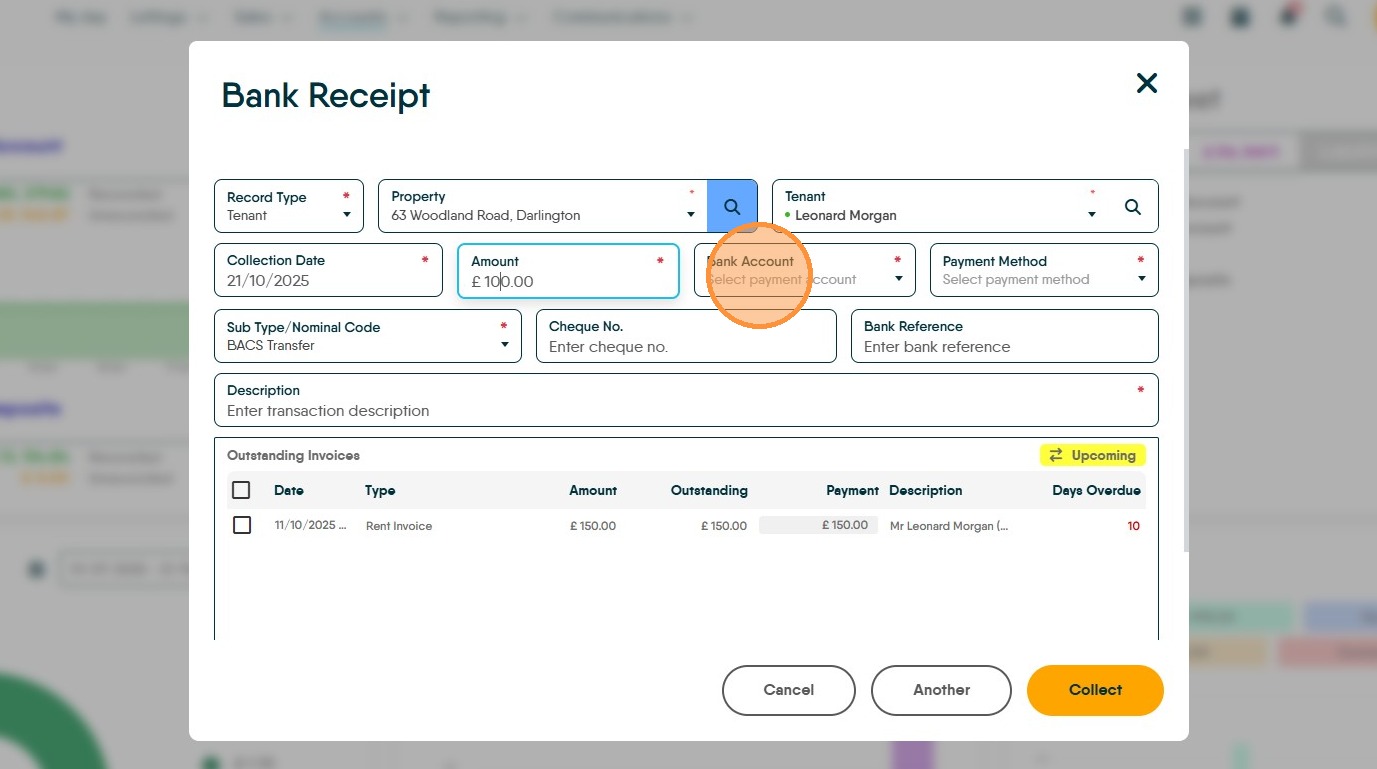
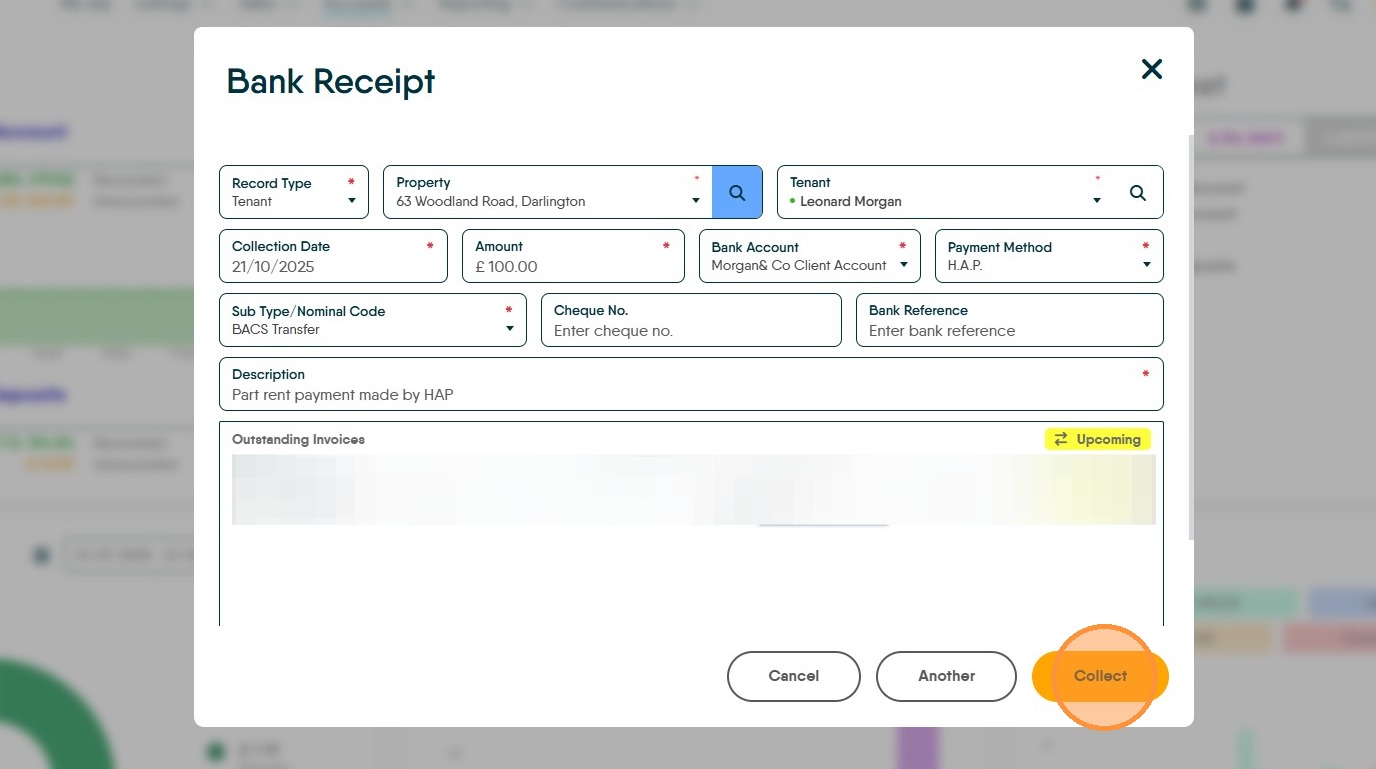
7. Click the "Amount" field and enter the amount that is being paid for Holding Payment/Deposit.
If an Invoice is visible in the lower part of the screen DO NOT select it. If you are collecting the Deposit invoice you would select at the this point.
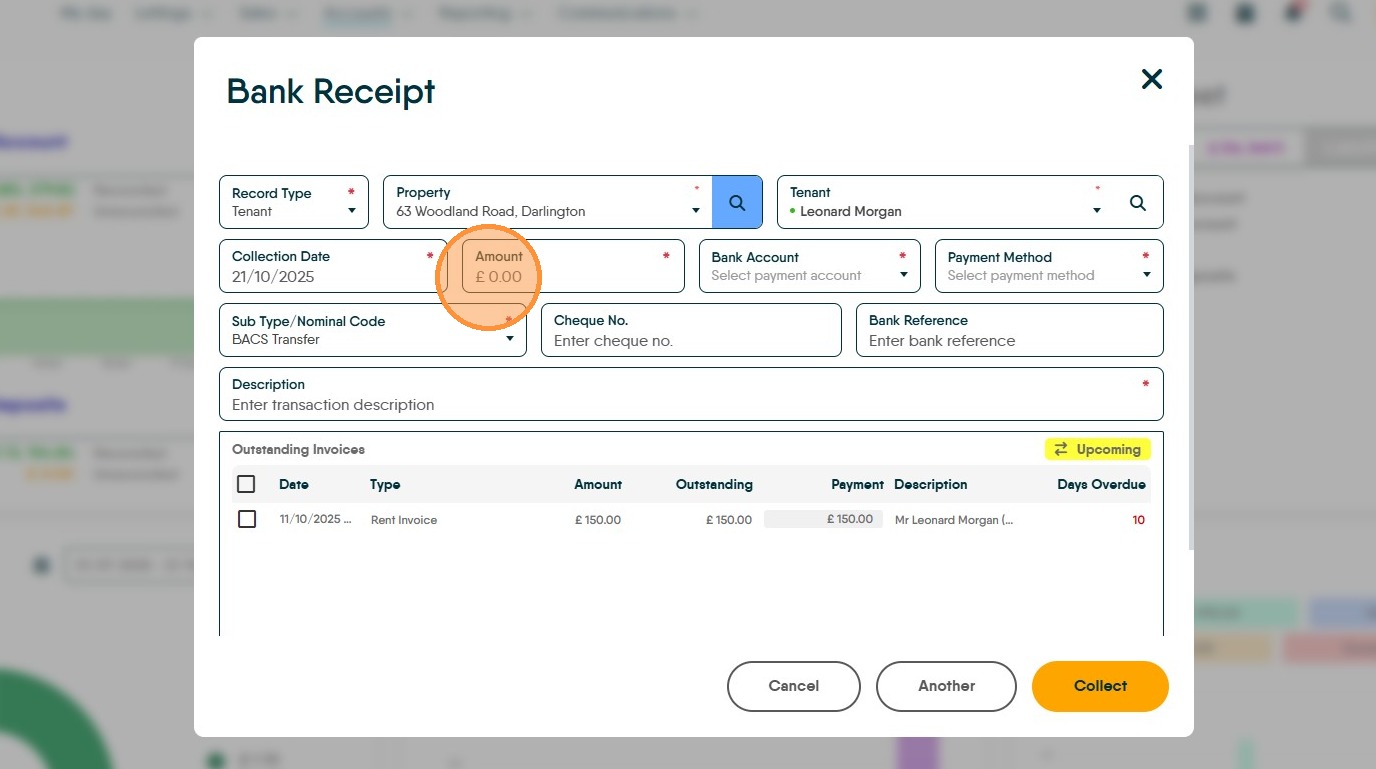
8. Click "Select payment account"
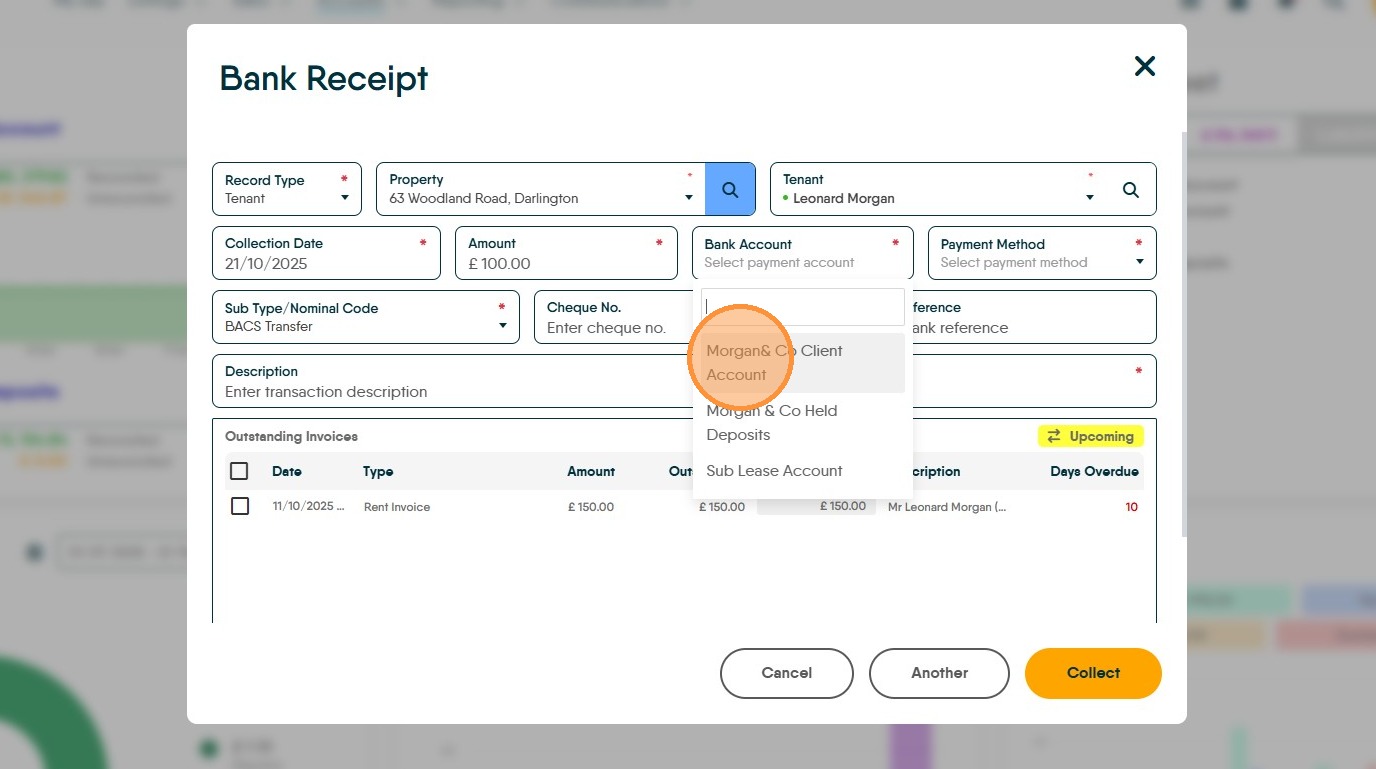
9. Click the name of the account that the money was paid into, usually your main client account. In this example it is shown as "Morgan& Co Client Account"
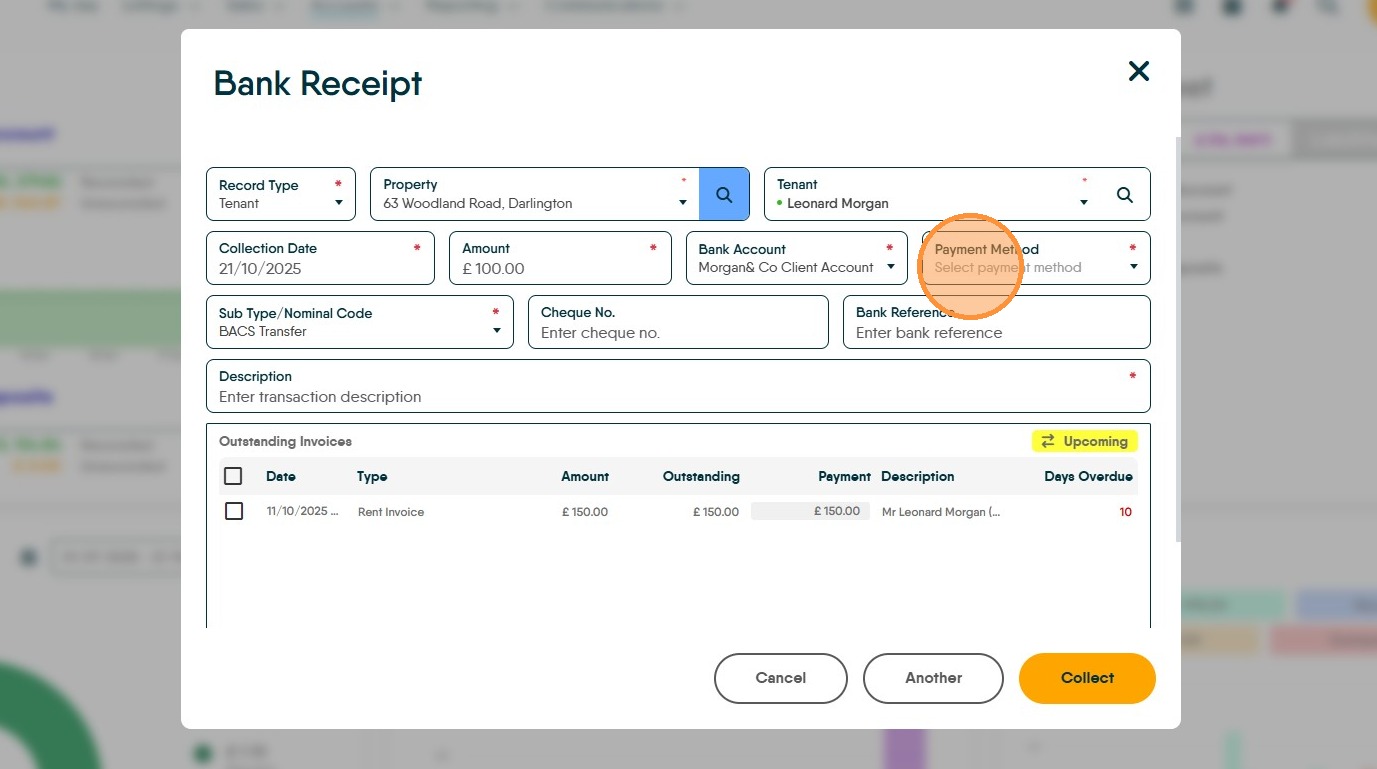
10. Click "Select payment method" this is an information field and can have new options added in 'configuration' as a 'lookup' You might add 'Holding Payment/Deposit'
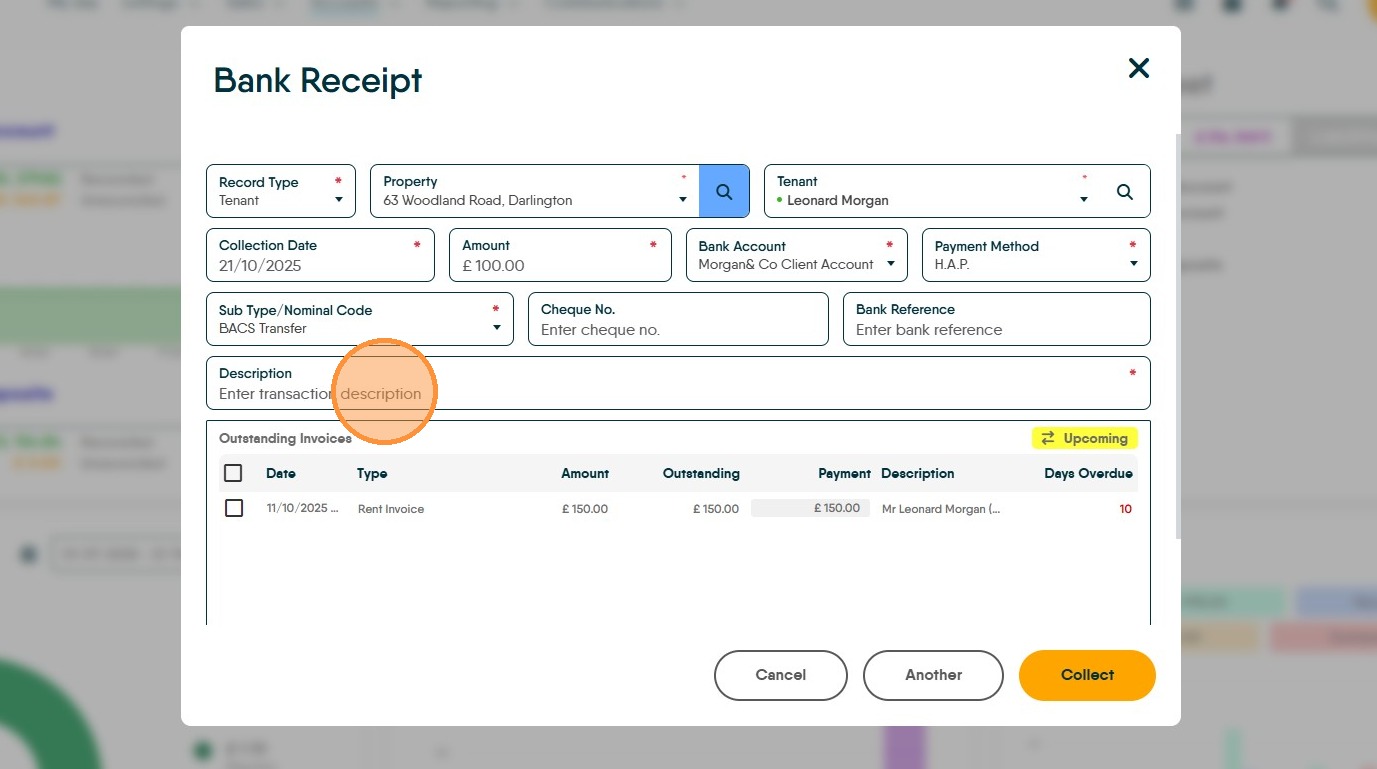
11. Click the "Description" field. Add a description of the transaction
12. As an example, if you are paying £100. Type £100 in the 'Payment' field. Then click "Collect"
13. The funds will then be added as 'Unallocated Funds' against the Applicant. This can be allocated against the first months rent when this is collected.
14. If you selected a Deposit invoice the funds will now show in the deposit tile in the accounts dashboard. They will still need to be transferred to the deposits protection scheme you are using.